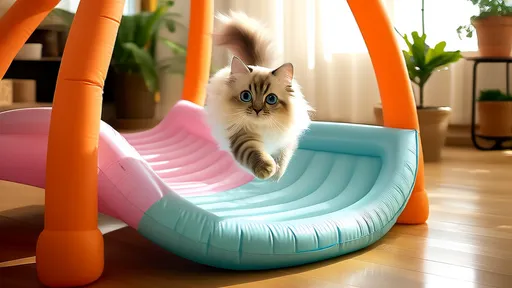
The world of pet entertainment has taken a fascinating turn with the rise of obstacle course designs tailored specifically for feline companions. Cat owners and enthusiasts are increasingly investing time and resources into creating elaborate, stimulating, and safe obstacle courses that challenge their pets both physically and mentally. These courses, often referred to as "cat agility" or "feline obstacle" setups, have evolved from simple homemade structures to professionally designed tracks that mimic the complexity of dog agility courses but with a distinctly feline twist.
What sets cat obstacle courses apart is their emphasis on verticality and flexibility. Unlike dogs, cats are natural climbers and jumpers, so these courses incorporate elements like tall scratching posts, suspended platforms, tunnels, and narrow beams. The design philosophy revolves around encouraging natural behaviors such as stalking, pouncing, and balancing. Some advanced courses even include puzzle elements where cats must manipulate objects to proceed, adding a cognitive challenge to the physical exertion.
The materials used in these courses are carefully selected to appeal to feline sensibilities. Sisal rope for scratching, soft fleece for landing surfaces, and lightweight movable components allow for frequent redesigns to prevent boredom. Many designers incorporate catnip-infused elements to increase engagement, while others use sound-making components like crinkly fabrics or small bells to trigger hunting instincts. The color schemes often lean toward natural tones that don't overwhelm feline vision, though some incorporate bright markers to help cats distinguish different sections.
Competitive cat agility has emerged as an organized sport, with tournaments held worldwide. These events showcase cats navigating standardized obstacle courses within time limits, judged on speed and accuracy. The competitions have revealed surprising differences in feline athletic abilities—some cats excel at speed while others demonstrate remarkable problem-solving skills at complex stations. This competitive aspect has driven innovation in course design, with modular systems that can be reconfigured for different difficulty levels becoming increasingly popular.
Beyond competition, these obstacle courses serve important functions in feline well-being. Indoor cats particularly benefit from the physical exercise and mental stimulation these setups provide, helping prevent obesity and behavioral issues stemming from boredom. Veterinary behaviorists have noted improvements in cats with anxiety or aggression problems after regular use of such courses. The courses also strengthen the bond between cats and their owners through positive reinforcement training methods used to teach navigation skills.
The commercial market for cat obstacle courses has expanded dramatically, ranging from affordable DIY kits to luxury custom installations. High-end designs might include heated perches, integrated water features, or even automated moving elements that create an ever-changing challenge. Meanwhile, the DIY community shares innovative designs using repurposed materials like cardboard boxes, PVC pipes, and old furniture, proving that stimulating environments can be created on any budget.
Looking forward, the field of feline obstacle course design continues to evolve with technological integration. Some designers are experimenting with smart courses that adjust difficulty based on a cat's performance or wearable tech that tracks a cat's progress through the course. Others are exploring augmented reality elements that could create virtual prey for cats to chase through physical obstacles. As our understanding of feline cognition and behavior deepens, these courses will likely become even more sophisticated, offering cats increasingly engaging ways to exercise their bodies and minds.
The cultural impact of this trend extends beyond pet ownership. Cat cafes are incorporating obstacle courses into their designs, and some workplaces are adding feline-friendly obstacle elements to their pet-friendly policies. The phenomenon speaks to a broader shift in how society views pets—not just as companions but as intelligent creatures deserving of specialized environments that cater to their natural abilities and instincts. This growing recognition of feline needs is reshaping everything from pet product design to urban architecture.

By /Aug 6, 2025

By /Aug 6, 2025

By /Aug 6, 2025

By /Aug 6, 2025

By /Aug 6, 2025

By /Aug 6, 2025

By /Aug 6, 2025
By /Aug 6, 2025

By /Aug 6, 2025

By /Aug 6, 2025

By /Aug 6, 2025

By /Aug 6, 2025
By /Aug 6, 2025

By /Aug 6, 2025
By /Aug 6, 2025

By /Aug 6, 2025

By /Aug 6, 2025
By /Aug 6, 2025

By /Aug 6, 2025

By /Aug 6, 2025
